Problem:
A multi-program division lacked structured, system-level visibility into labor allocation, skill distribution, and forward workload forecasting. Workforce planning relied on disconnected spreadsheets and manual reconciliation, creating risk in cost estimation, contract bidding, and delivery capacity planning.
Scope:
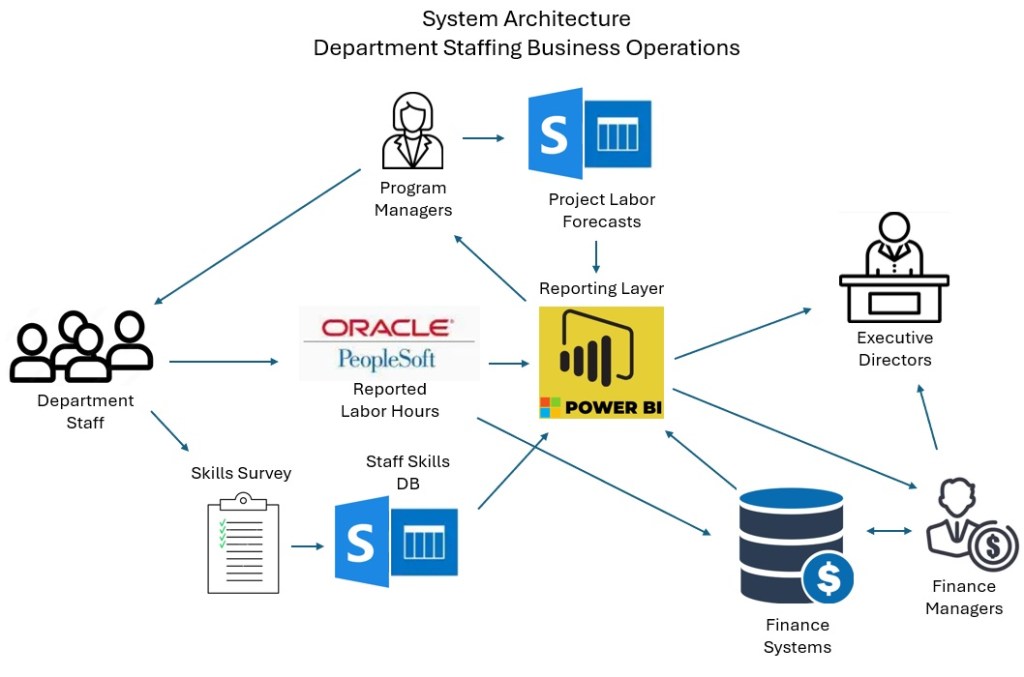
Enterprise workforce planning across 800+ staff supporting 9 large scale programs and 100s of concurrent projects. Required integration of labor tracking, skills metadata, and financial data into a unified reporting and forecasting system aligned with contract obligations.
Approach / Skills:
Led requirements gathering and end-to-end design of a SharePoint-based labor forecasting platform using structured SharePoint Lists as a relational front-end database layer. Modeled data relationships using ERDs and defined normalized metadata schemas to support cross-program reporting.
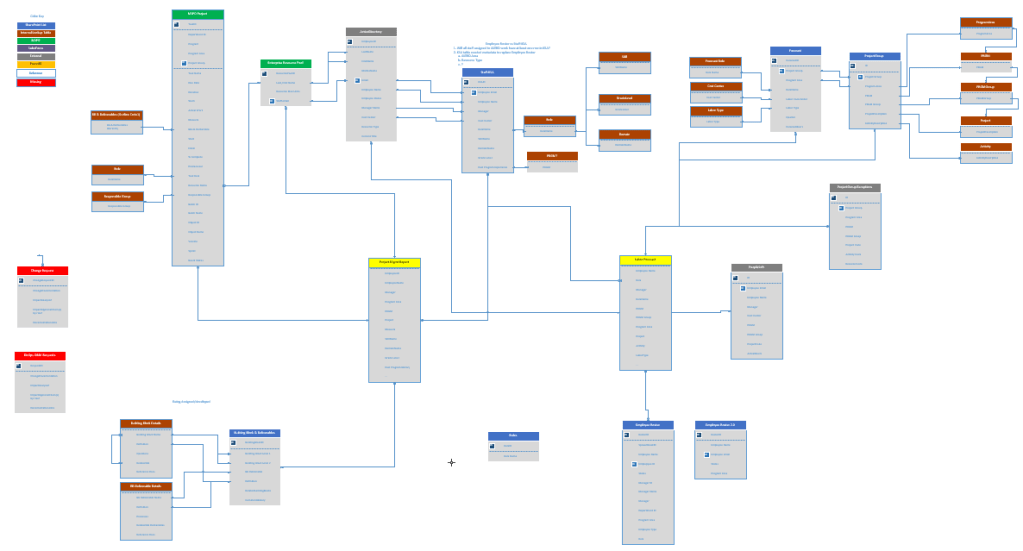
Designed monthly and quarterly forecasting workflows tied to deliverables and contract scopes. Built a structured staff skills inventory database, including survey instruments and manager validation processes to support resource matching.
Collaborated with IT to architect data integration pipelines between SharePoint, enterprise systems (e.g., PeopleSoft), and downstream reporting tools. Co-designed and helped build Power BI dashboards to visualize labor allocation, forecast variance, and capacity constraints. Led construction, debugging, validation, rollout, and end-user training.
Applied data modeling, enterprise systems thinking, stakeholder facilitation, BI reporting design, and cross-functional technical coordination.
Results:
Established the first integrated labor forecasting and skills intelligence system across programs. Improved bid accuracy, increased staffing alignment precision, reduced manual reconciliation, and enabled leadership to make data-driven resource decisions within a regulated, multi-contract environment.

